Showing posts with label China. Show all posts

Monday, August 17, 2015

Chinese Porcelain

Chinese ceramics are one of the most significant forms of Chinese arts.
Porcelain, also called 'fine china', featuring its delicate texture, pleasing color, and refined sculpture, has been one of the earliest artworks introduced to the western world through the Silk Road.


The Chinese tradition recognizes two primary categories of ceramics: high-fired and low-fired. Chinese ceramic wares can also be classified as being either northern or southern. Present-day China comprises two separate and geologically different land masses, brought together by the action of continental drift and forming a junction that lies between the Yellow and Yangtze rivers. The contrasting geology of the north and south led to differences in the raw materials available for making ceramics.


Through the development of 4,000 years, it is a brilliant art that attracts many people's interest. The Porcelain Capital,Jingdezhen in Jiangxi Province which has been praised for thousands of years, represents the style and aesthetic taste.


Chinese export porcelain includes a wide range of porcelain that was made and decorated in China exclusively for export to Europe and later to North America between the 16th and the 20th century.


Thursday, February 19, 2015

How Chinese New Year Festival Impacts the Global Economy

新年快乐

Even if you can’t read the above characters, their meaning is of great significance for exporters as well as for the global economy. The characters are translated as “Happy Chinese New Year,” and they are shared by more than 1.3 billion Chinese citizens and millions of others across the globe who celebrate the holiday.
It is worth mentioning, that decades ago the Chinese New Year celebrations, also called Spring Festival, had negligible impact outside of the nation. But as China has gained outsized shares of global production and economic influence, the centuries-old holiday, which has profound cultural significance in the Chinese-speaking countries, has acquired considerable prominence. This is how it impacts the global economy.

FACTORY FREEZE

The Chinese New Year is the holiday that gets companies to close their doors. This year, the holiday starts from Feb. 18 to Feb. 25, but it’s common for factories and businesses to close several days before the New Year to give workers time to travel to their families.
Thus the holiday has a significant impact on exporters. Territories with significant Chinese populations, including Macau, Taiwan, Singapore, Thailand, Indonesia, Malaysia, Mauritius and Philippines are also affected by the holiday; production comes to a halt, slowing down foreign trade as well.
Therefore, it is strongly recommended to plan ahead and schedule shipments carefully. Shipping companies usually warn customers that China’s transport and logistics networks are at capacity and their shipments must be at ports two weeks ahead of the holiday to stand a chance of getting on a boat before the country shuts down.
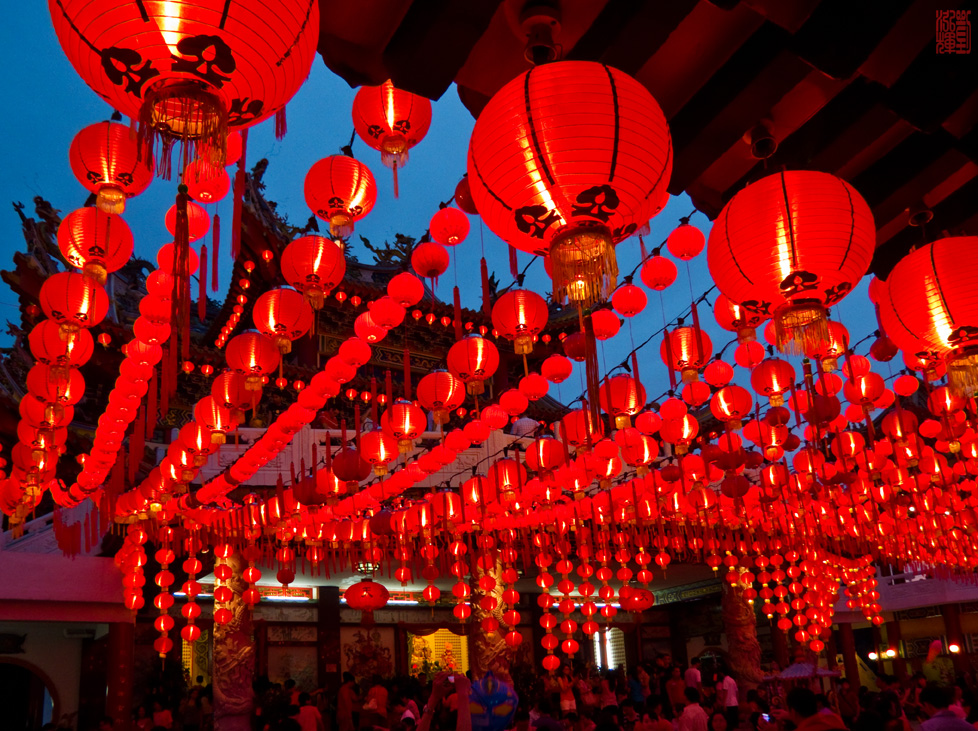
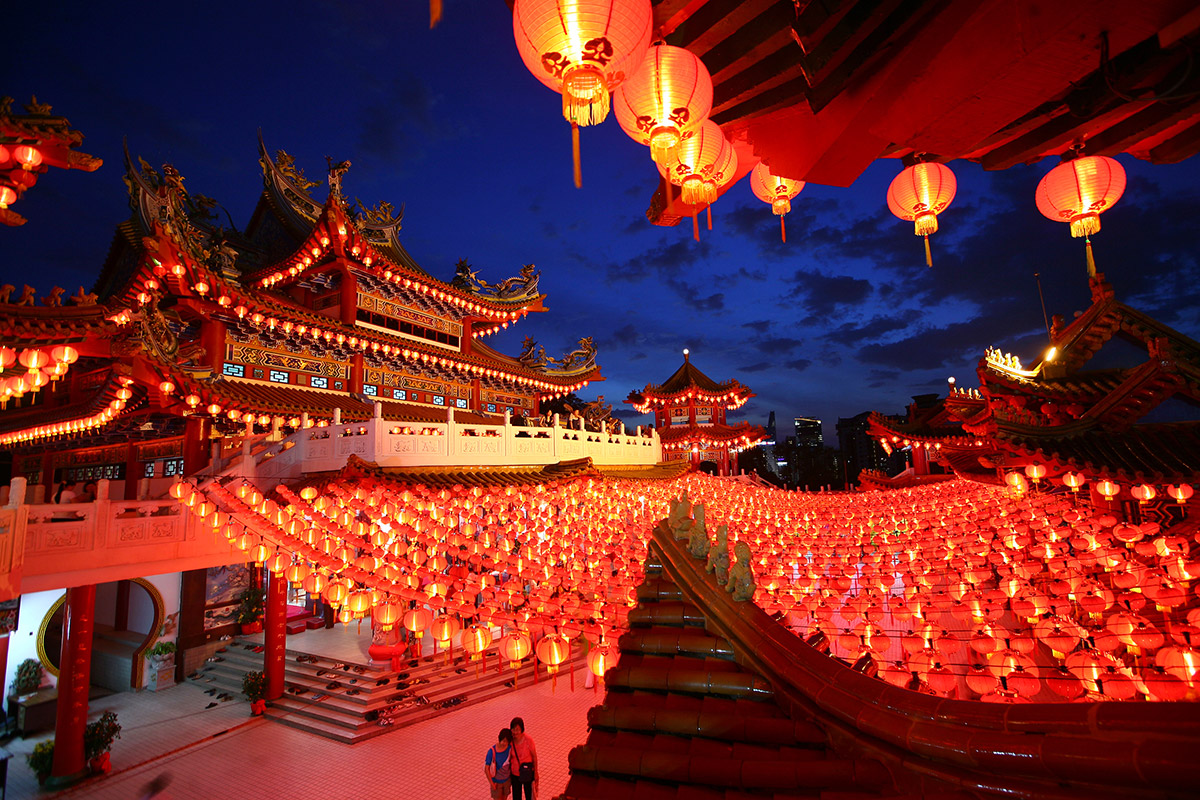
CRW_4947a thg red lanterns2 (web)

GLOBAL SHOPPING QUIET MARKETS

The festival in question is unquestionably the most important time of the year for family reunions, but as China has become a prosperous country, an increasing number of wealthy Chinese make their decision to travel abroad. This tendency translates into big business for international luxury brands. For instance, many British department stores are pulling out all the stops to attract the attention of Chinese shoppers. (Designer watches, jewelry and handbags can be up to 30% cheaper in Europe because of high luxury taxes in China.)
red-lanterns

 QUIET MARKETS

“Trading volumes “drop off considerably” about three working days before the start of the holiday”, said Andrew Sullivan, managing director at Haitong Securities in Hong Kong. “This year, Friday was “the last day that you can sell in Hong Kong and get your money before Chinese New Year” under trading settlement rules”, he said. “Foreign investors also tend to wind down trading in Asia as the holiday nears”, Sullivan said.

Tuesday, April 8, 2014

Rice Culture of China

Chinese culture is based on numerous subcultures and its agriculture, a way of life, is centered on rice. It has been suggested that rice has been cultivated for 3000-4000 years, where it gradually rose to become an important part of life.


Nowadays China is the world's largest producer of this crop, and it makes up a little less than half of the country's total grain output. It is interesting that China accounts for 26% of all world rice production.


The Chinese people eventually developed a process of growing rice on farms using puddling soils and then transplanting the seedlings. Today, this system is still widely used in China.

All rice cultivation is highly labor intensive. Rice is generally grown as a wetland crop in fields flooded to supply water during the growing season.Transplanting seedlings requires many hours of labor, as does harvesting. Mechanization of rice cultivation is only minimally advanced.

Here are some amazing pictures of how rice is cultivated in China.


Thursday, March 20, 2014

China as an Apparel Importer

China is considered to be the single largest apparelexporter in the world. However, with the evolution of the globaltextile & apparel sector over the past decade, it is the time toseriously study China as a fast-growing apparel import market.


First and foremost, it is a wrong perception that Chinese consumers only consume clothing “made in China”. In Zara’s stores in Shanghai, over 90% of stock-keeping units are imported, with Bangladesh, Egypt, Morocco, Portugal, Spain, Turkey, and Viet Nam and being the main import sources.

   However, like any other countries in the world, the apparel import market in China also has its unique features & patterns. For example, woven men’s wear accounted for almost 1/3 of China’s total apparel imports. As another important feature: in 2012, 83% and 13% of China’s apparel imports came from Asia and Europe respectively, leaving only 4% market share for the rest of the world.


   Many famous international brands set up mainly in first-tier cities and then establish their presence in second-tier cities. Currently, the tendency is for famous brands to penetrate into more second-tier cities. Among the first-tier cities, Shanghai plays a significant role in setting fashion trends on the mainland. Therefore, many foreign and domestic apparel suppliers choose to first establish a foothold in Shanghai before seeking further expansion.