Showing posts with label Italy. Show all posts

Wednesday, April 1, 2015

ITALY’S FOOD AND BEVERAGES EXPORTS UP

Italian food exports reached record high in 2014,  according to Italy’s agricultural producers association. The article lists some of the most famous Italy’s food export successes:
Cheese exports – especially the exports of parmigiano reggiano and grana. Italy represents one the most important players in the dairy industry. The national production combines tradition, top-quality and volumes. Last year Italy exported 321.989 tons of cheeses, confirming a positive balance of trade for dairy products. These figures confirm the quality and the reputation of Italian cheese production, that offers the world a great variety of traditional cheese. All these cheeses are unique in their nutritional characteristic and processing technique.
Wine Exports – it is a well-known fact that Italy produces great wines. The country’s rich and diverse wine heritage dates back more than two thousand years. It is rivaled in this regard only by France and Spain.
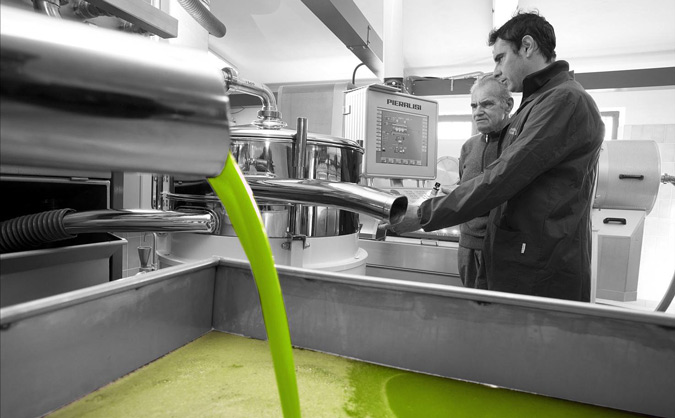
Olive oil exports – The ancient Greek poet Homer referred olive oil as “liquid gold”. Not surprisingly, considering the fact that olive oil has been a staple of the Mediterranean diet for centuries. Italy is considered one of the primary producers of olive oil. The country was also the most award-winning nation at the international competition in New York, winning 87 awards.
franci1
Pasta exports – Italy is famous for pasta. Pasta is integral part of Italy’s food history. Unlike other famous products like tomato sauce and pizza, which have a fairly recent history, pasta has a much older pedigree, dating back thousands of years.
Italian beer – Beer is booming in Italy. The country brews some excellent and interesting beers which have been gaining popularity abroad due to the Italian’s dedication to their craft and their expertise.

The Future?

A great number of countries around the world represent potential markets for foodstuffs “made in Italy’. For instance, the dried version of pasta, with its long life should be easy to export all over the world.
Then there are many emerging and developing markets. China, Africa, Brazil, and India are expected to come on stream soon.
Italy’s food industry is very healthy and it has all the chances to become a major driver in Italy’s economic recovery.

Friday, May 30, 2014

Best Coffee in the World? Where else but Italy?

It would be hard to imagine Italy without coffee. Italian coffee is an art form with many customs and traditions. It is the main part of the national breakfast and the home to coffee drinks that have taken the rest of the world by storm. Italians managed to invent a coffee culture unequaled anywhere else in the world, even despite the fact, that the coffee itself was discovered in South Africa.


Nowadays there are many coffee roasters present in the country, processing imported green coffee.

In 2011 Italy took third place (behind Germany and Belgium), in the classification of the main roasted coffee exporters, with a volume of 2,5 million bags. The sector has held up mainly thanks to exports, which now account for 60% of total turnover.

This positive trend confirms the increasing appreciation for the Italian coffee from foreign markets.

If we look back in history, coffee was first shipped from the Middle East to Venice. At that time it caused a furore. Coffee consumption soon spread to Rome and the rest of Italy, with imports arriving at the ports in Naples, Bari and Sicily. It became an important staple in the Italian cuisine, evolving in a culture that is still relevant today.

If you want to taste probably the finest coffee in Italy, you should visit Trieste. The Italian port bristles with life and has a fascinating history.


During 2011 the Port of Trieste was able to keep the first position for the import of green coffee.
Trieste’s love-affair with coffee goes back many years, to the time of the maritime trade routes.Its tax-free port status coincided with the coffee craze sweeping Europe.

The port is considered to be the main hub of the coffee trade of this city in Friuli-Venezia Giulia, with exports directed more and more towards Eastern Europe and imports increasingly following routes in Brazil, India, Indonesia and Vietnam.

The port city developed a string of Viennese-style coffeehouses. You can visit still several of them, such as Caffè Tommaseo with its faded bello époque charm.

It is worth mentioning that in Italy the market of espresso machines for professional use is flourishing as well: in 2005 the turnover made up about €287m, of which €212m from abroad (thanks to Asian markets, the USA and Australia).

Basically, the sector of espresso coffee machines exports excellence to the rest of the world, also in terms of style and innovation.

Friday, May 16, 2014

Countries with no natural resource but, thrive to become world major exporters


The article lists countries that don't have much resources by its own, but still managed to contribute at least $200 billion worth of exports to the world.

Japan is a beautiful country with beautiful nature. A mountainous, volcanic island country, Japan does not have sufficient natural resourches for its own needs. The country however, built up a very diversified, varieties of advanced industries that are among the world's most successful. Japan's major exports include automobiles, consumer electronics, computers, semiconductors, copper, iron and steel.


 South Korea is one of the world's leading industrial powerhouse today. Major exports of South Korea include semiconductors, wireless telecommunications equipment, automotive, computers, steel, ships, petrochemicals, high tech electronics and information displays. The South Korean economy is still expanding at the fastest pace.


Though Italy doesn't have many bustling skyscrapers, it is one of the world's leading economies. The Italian economy is driven in large part by the manufacture of high-quality consumer goods produced by small and medium-sized enterprises.The main weakness Italy has is the lack of resources. Major exports of Italy include engineering products, textiles and clothing, production machinery, automotive, transport equipment, chemicals; food, beverages and tobacco; refined metals and high-end luxurious consumer products.
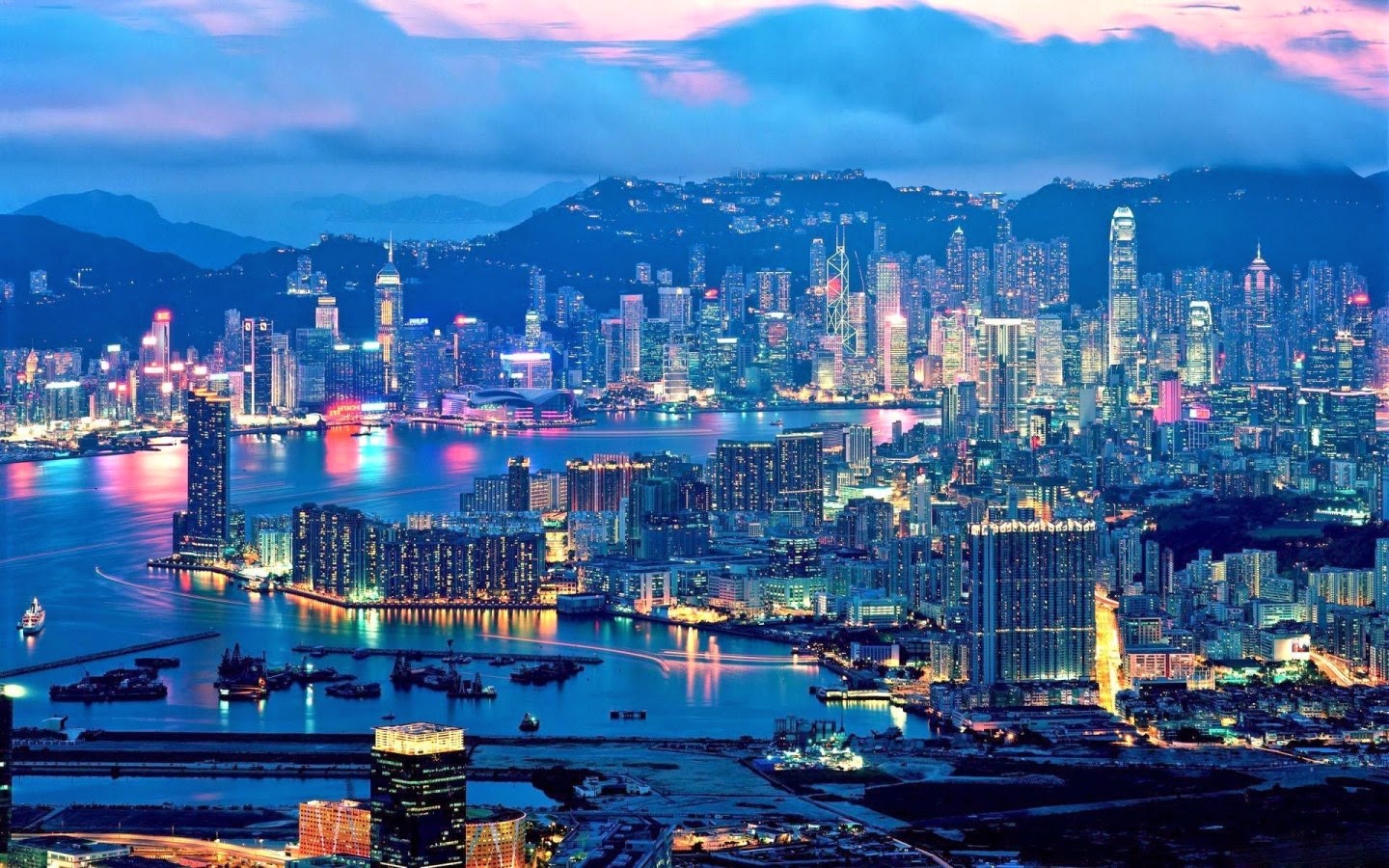
Hong Kong, due to its size, has very little arable land and natural resources, so it imports most of its food and raw materials. Hong Kong is the world's largest entrepot, the city does not produce much, but it imports semi-manufacture, refine and assemble them, then re-export them.
96% of Hong Kong's exports are made up from re-exports. Major exports of Hong Kong include textiles & clothing, electronics, plastics, toys, watches and clocks.
A leading entrepot like Hong Kong, 48% of Singaporean exports are made up from re-exports but unlike Hong Kong, Singapore has a strong manufacturing industries of its own. The tiny island produces 10% of world's semiconductor wafer. Major exports of Singapore include machinery and equipment, electronics, semiconductor, consumer goods, food & beverages, pharmaceuticals and other chemicals and refined oil. The rest are re-exports.

Switzerland economy focuses on niche industries, specifically light and agricultural industries. Switzerland has very strong food processing and confectionery industry, producing multinational food company such as Nestle. The Swiss also excelled in luxurious watch-manufacturing, with well-known global brands such as Rolex and Swatch. Major exports of Switzerland include machinery, chemicals, metals, watches, agricultural products and foodstuffs, and the country is the 19th largest economy in the world.


Taiwan experienced rapid industrialization which transformed it into the world's no.1 hi-tech electronics and semiconductor manufacturing hub. In the 1980s, Taiwan had become an economic power, with a mature and diversified economy, solid presence in international markets.By 2010, Taiwan replaced Japan as the world's top producer of semiconductor. Major exports of Taiwan include computers, electronics, semiconductor, flat panels, machinery; metals; textiles, plastics, chemicals; optical, photographic, measuring and medical instruments.